





September 20, 2026


Oops! Something went wrong while submitting the form.


Over the course of 2025, Owlpharma further strengthened its position in the field of Pharmacovigilance (PV) auditing.
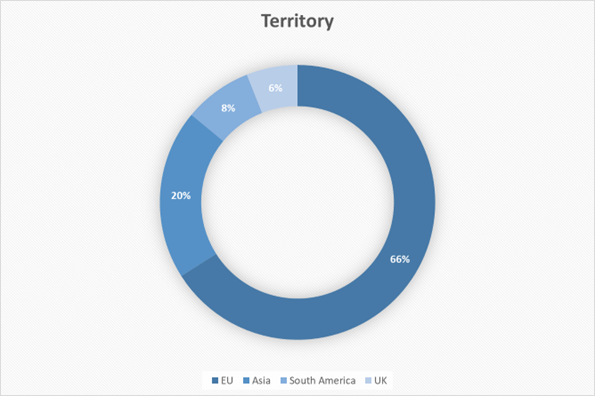
Around 50 audits were conducted throughout the year, covering different territories and legislative frameworks. Apart from the EU, we had the opportunity to oversee processes implemented in Asia (from Israel to South Korea), South America (from Peru to El Salvador) and United Kingdom.
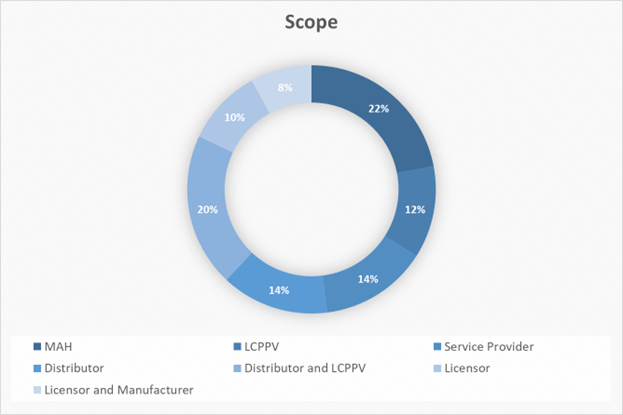
The scope varied considerably, ranging from marketing authorization holders, where the full PV system was assessed, to audits focused on more local or limited responsibilities (involving LCPPVs or distributors) or even to outsourced specialized service providers (e.g., computerized safety databases, medical/scientific literature screening services, and market research activities).
In total, more than 300 audit findings were raised, of which 0% were classified as critical, 18.4% as major, and 81.6% as minor.
The audit findings identified may be divided into two main topics: Quality Management System and PV activities.
Focusing on the Quality Management System (QMS)’s discussions throughout the audits, the following main weaknesses were identified:
• Document and Record control:
o Processes not documented;
o Absence of completeness, accuracy and integrity of the pharmacovigilance data.
• Training:
o Fragile process for training needs assessment Vs. training plan;
o Initial and refresher training: content, conduction and assessment issues.
• Audits:
o Vendor oversight deficiencies: no risk assessment;
o Internal auditing issues: auditors not independent/not qualified;
o PV obligations not always clearly defined in contracts.
• Business Continuity Plan (BCP):
o Absence of a complete BCP process, or insufficient depth in the risk analysis of critical processes affecting business continuity, including inadequate identification of mitigation measures.
With regards to PV activities, the issues below were raised:
• Qualified Person for PV (QPPV)/Local Contact Person for PV (LCPPV) responsibilities:
o 24/7 availability and respective testing issues;
o Handover not documented.
• Pharmacovigilance System Master File (PSMF):
o Lack of depth in KPIs assessment: quality of submissions often overseen;
o Lack of documented QPPV oversight.
• Individual Case Safety Reports (ICSR) Management:
o Safety Database issues (data security, confidentiality and strict control measures not ensured);
o Weak follow up processes;
o Late submission to the authority(ies).
• Literature Screening:
o Inadequate search strategies;
o Limited number of local journals/List not reviewed.
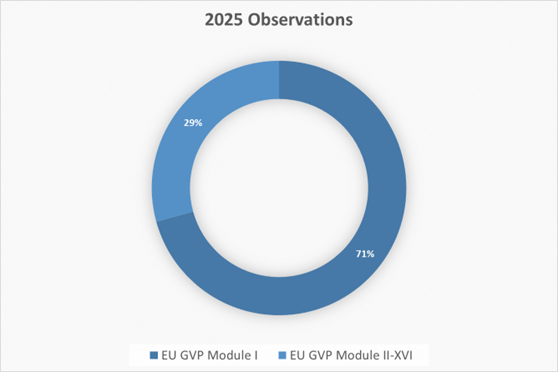
As Chart 3 clearly indicates, the findings related to EU GVP Module I (Pharmacovigilance systems and their quality systems) clearly surpass the remaining EU GVP modules, more focused on the PV processes.
This outstands as the chapter of the guidance our auditees revealed more fragilities.
When viewed from a regulatory inspection standpoint, some trends can also be identified in the most recent data available for inspection findings issued by both the Food and Drug Administration (FDA) and European Medicines Agency (EMA), as summarized below.
FDA
In the recently published FDA inspection summary for the fiscal year of 2025, deficiencies most frequently identified within the scope of pharmacovigilance include:
• Failure to establish or maintain written procedures – 12 reports;
• Late submission of reports to regulatory authorities – 18 reports.
EMA
The annual report of the Pharmacovigilance Inspectors' Working Group for 2024, adopted by the PhV IWG on 25 September 2025, indicates that a total of 87 deficiencies were recorded during CHMP requested human medicines PV inspections conducted in 2024. Of these, 0% were classified as critical, 33.33% as major and 66.67% as minor.
The three most common areas with findings identified during inspections conducted in 2024 included: management and reporting of adverse reactions, QMS and PSMF.
Key Takeaways
The assessment of the data collected from both agencies and Owlpharma’s own analysis indicates a clear trend: the QMS supporting PV activities, the maintenance and management of the PSMF, and the timely reporting of adverse reactions remain key areas requiring continued attention.
As companies continue to demonstrate vulnerabilities in these areas, it is expected that they will remain key focus points during audits and inspections in the near future.
If you want to understand more about Owlpharma process or our audit services, please feel free to contact us, we will be happy to become a trustworthy and reliable auditing partner for your company.
September 20, 2026
Mariana Pinto

September 17, 2026
Ana Rita Cordeiro
August 5, 2026
Matilde Gil